Case Study
Five projects that shaped how Convene sells, operates, and serves
Overview
The first product hire at a hospitality-driven workspace company
Convene operates a network of premium meeting, event, and flexible office spaces across major US and UK cities. Think hotel-quality service applied to the workplace — attentive staff, beautifully designed rooms, seamless AV, catered food — all sold to Fortune 500 clients running high-stakes conferences, off-sites, and day offices.
I joined as Convene's first product person. Over five years, I built five distinct products that each addressed a different layer of how Convene operated and grew: the tools that helped the sales team sell, the apps and websites that let customers self-serve, the platform that brought Convene's hospitality into Class A office buildings, and the pivot that kept the business alive when the pandemic shut every physical space overnight.
A custom Salesforce build for two very different sales teams
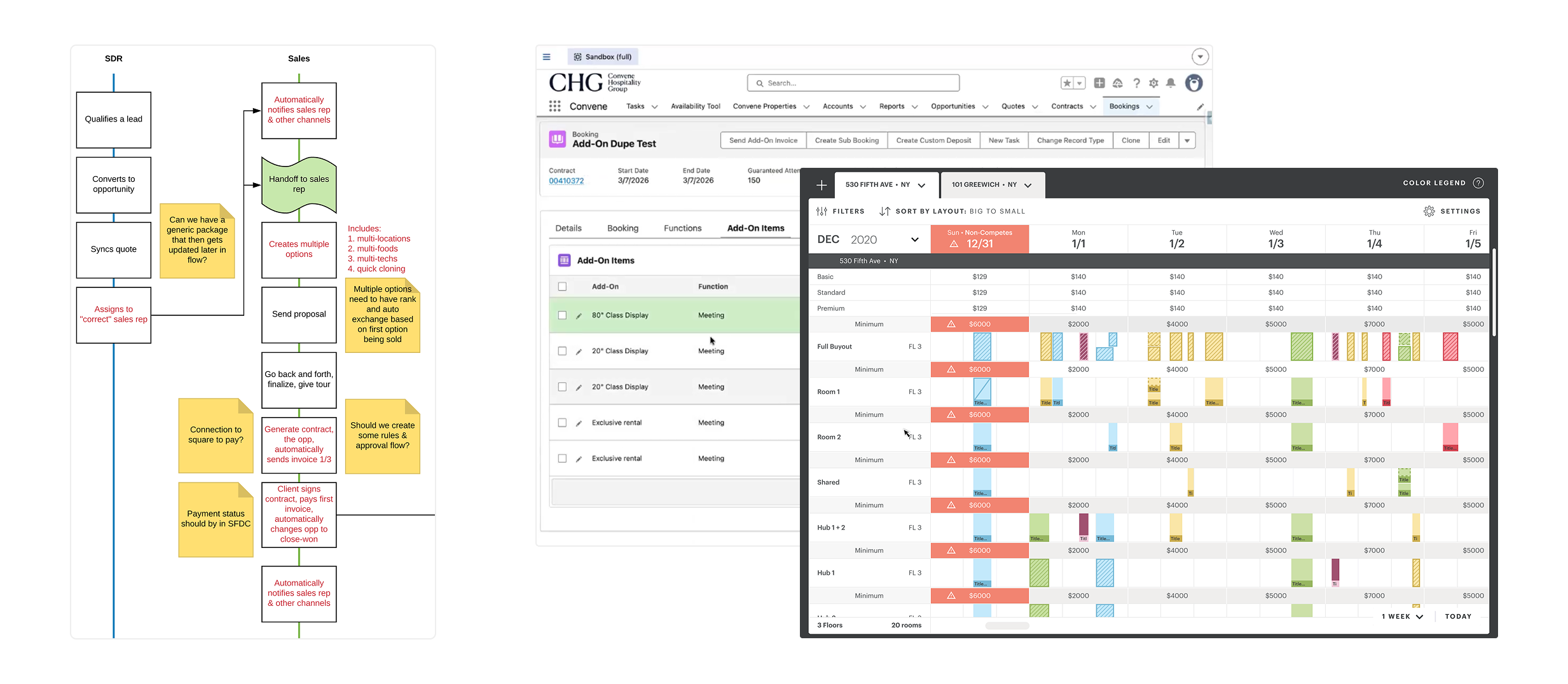
Convene had two distinct commercial teams operating side by side: meetings & events sellers closing high-stakes conference bookings, and flex office sellers managing longer-term workspace memberships. Each had fundamentally different deal cycles, pricing structures, handoff points, and success metrics — but they were working out of generic, misconfigured CRM setups that served neither well.
I led the implementation of a custom Salesforce instance purpose-built for both teams. For M&E, we designed pipeline stages that mirrored the actual event booking lifecycle — from initial inquiry through room hold, contract, catering confirmation, and day-of execution. For flex office, we built a membership-focused pipeline with recurring revenue tracking, occupancy visibility, and automated renewal triggers. Shared accounts were structured so both teams could see the same client without stepping on each other's data.
The build also included automated handoffs from sales to operations, so the moment a deal closed the ops team had everything they needed — room config, AV requirements, catering selections — without a single manual email.
Meetings & events pipeline
Configured deal stages that mapped to the real lifecycle of an event booking, with automated task triggers at each stage to keep sellers and coordinators in sync through to day-of execution.
Flex office pipeline
Built a membership model with recurring revenue tracking, occupancy dashboards, and renewal automation — giving the flex team a proper view of their book of business for the first time.
A self-serve app for flexible office customers to book, order, and host
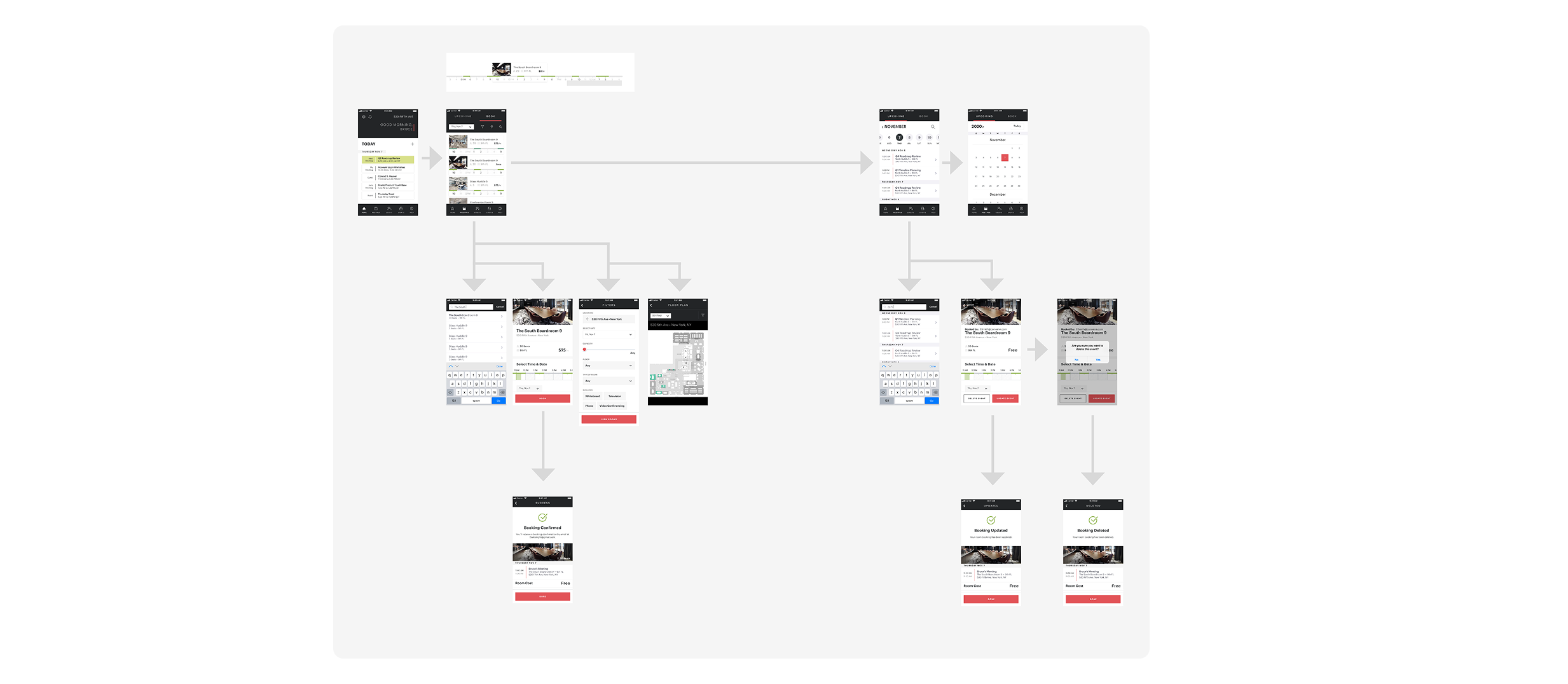
Convene's flex office customers — companies taking dedicated or shared workspace inside a Convene location — needed a way to manage their day without relying on staff for every request. The experience inside the space was excellent, but too much of it depended on finding someone to ask. We set out to put that control in customers' hands.
The WorkPlace app gave flex office members a single place to book meeting rooms within their location, order food and beverages from Convene's hospitality team, and invite guests — generating day passes, sending arrival instructions, and notifying reception automatically. The underlying challenge was threading together three separate backend systems (room inventory, food & beverage, and visitor management) into a single coherent experience that felt effortless on the surface.
Every decision was benchmarked against the physical experience: if it would be faster to just ask someone at the front desk, the app wasn't doing its job. We ran iterative testing with members at multiple locations throughout the build, and the feedback loop was tight — often turning observations from Tuesday into fixes by Friday.
"The product had to be as good as the room. If someone is paying for a Convene experience, the digital touchpoints have to earn the same trust as the person greeting them at the door."
Elevate: bringing Convene's hospitality into Class A office buildings
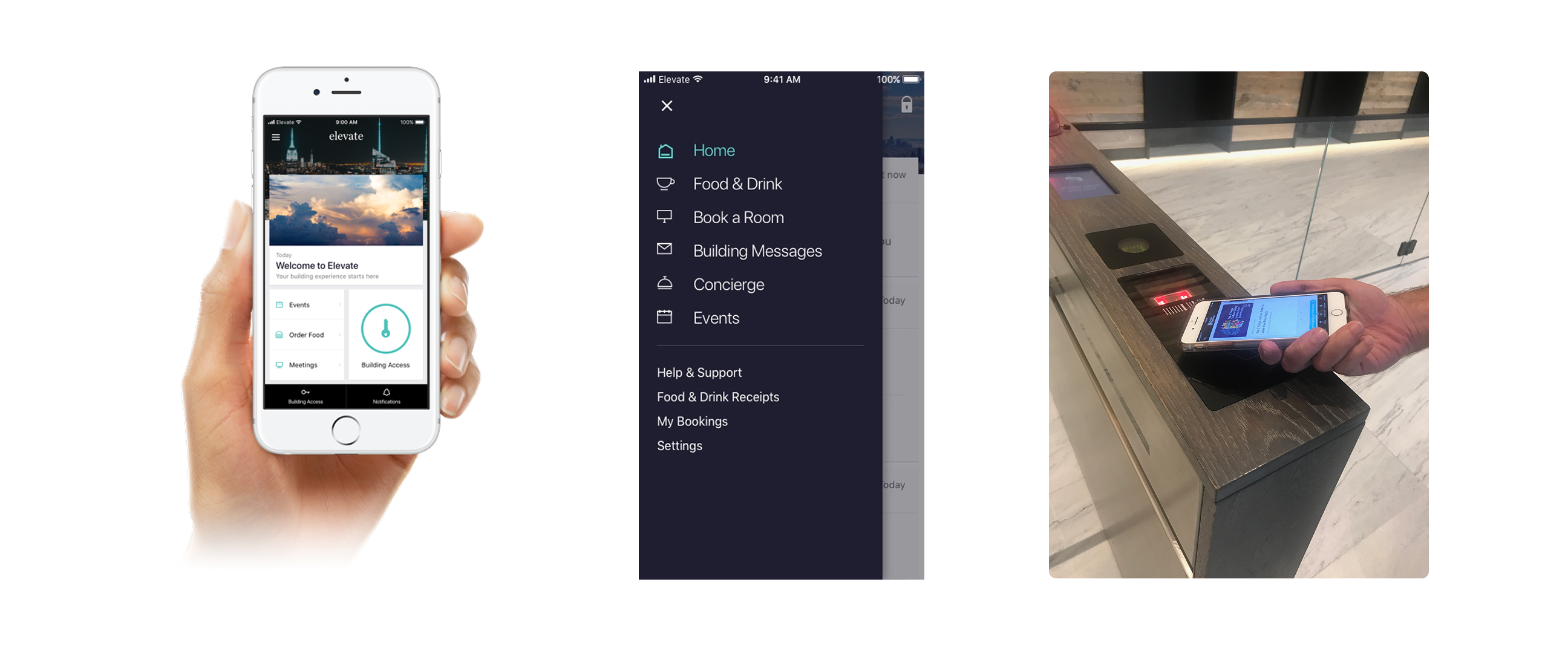
Elevate was the product I was originally hired to build — and the one that most directly expressed Convene's vision of what the modern workplace could be. The idea: partner with Class A commercial real estate landlords to offer their tenants access to Convene's hospitality infrastructure as a building amenity. Tenants in the building above could use Convene's spaces, staff, and services the way a hotel guest uses concierge.
For tenants, this meant a single app to book conference rooms in the Convene space below, request services (catering, AV setup, guest reception), reserve event space for company celebrations, or simply grab a day office when they needed to focus away from their floor. The value proposition to landlords was equally clear: Elevate made their building more attractive and sticky without requiring them to build or operate anything themselves.
The product required a careful multi-tenant architecture — each building's tenants saw only their building's inventory and amenities, with their own branding, but shared the same underlying Convene infrastructure. I worked closely with the engineering team to define the tenancy model, and with Convene's real estate partnerships team to design the onboarding experience for new landlord relationships.
For tenants
A branded, building-specific app giving Class A office tenants access to Convene's spaces and hospitality team — meeting rooms, catering, event space, guest services — without ever leaving their building ecosystem.
For landlords
A turn-key amenity layer that made their building more competitive in the market, with zero operational overhead. Convene ran everything; landlords got the credit.
Pivoting meetings & events to digital when every space went dark
In March 2020, every Convene location closed overnight. The entire meetings and events business — the original core of the company — was suddenly at zero. The contracts on the books were at risk of mass cancellation, and without a physical space to sell, the commercial team had nothing to offer.
Within weeks, we had scoped and launched a virtual events offering that let Convene's M&E clients shift their planned conferences, board meetings, and training sessions to a fully managed digital format. Convene would handle the technology (video platform, production support, breakout sessions, attendee management), the logistics (run-of-show, speaker prep, technical rehearsals), and the hospitality touches (branded experiences, virtual F&B packages delivered to attendees' homes) — everything except the physical room.
The pivot was fast and imperfect, but it was real. Clients who had already committed their budgets could honor those commitments in a new format rather than requesting refunds. The revenue retention impact was significant — contracts that would have been written off were instead delivered, and several clients expanded their events calendar because virtual removed the logistical ceiling on attendance and geography.
"We didn't have the luxury of doing this slowly. The team shipped something meaningful in weeks, and it kept real money on the books when the alternative was watching it walk out the door."
Designing a way to sell meetings & events directly on convene.com
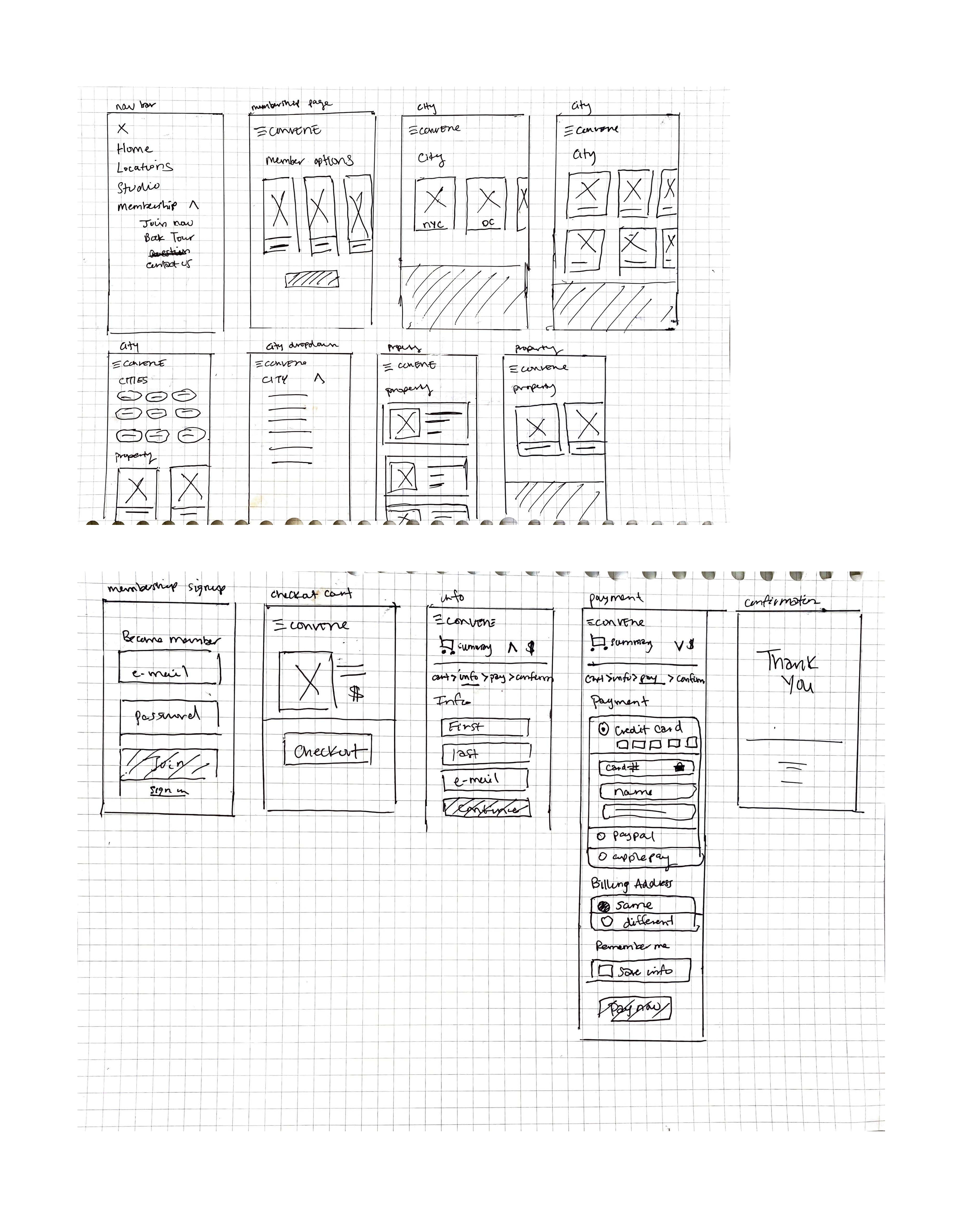
Before and in parallel with the pandemic pivot, I began exploring a question that had been sitting in the background for a while: why couldn't a meeting organiser simply go to convene.com, find a space, configure their event, and book it — without ever talking to a salesperson?
The M&E sales motion at Convene was almost entirely human. An inquiry came in, a seller responded, a proposal was built, a contract was negotiated. For smaller or more standardised events — a half-day board meeting, a quarterly team offsite, a training session — that process was heavy relative to the deal size. Self-serve discovery and booking had the potential to open a new acquisition channel and reduce friction for clients who already knew what they needed.
I designed a discovery and booking experience for convene.com that let users browse venues by city and event type, configure their event (date, room layout, catering, AV, attendee count), get a real-time price estimate, and submit a booking request — with the option to connect to a sales rep for complex events rather than dead-ending in a form. The design covered the full funnel: search and filtering, space detail pages, a configuration flow, and a checkout-style review screen.
The work did not ship. The business was shifting priorities toward advancing the sales tools and flex office, and then the pandemic changed the company's immediate focus entirely. But the design laid out a clear picture of what a self-serve M&E channel could look like — and the underlying question of how to reduce sales friction for smaller events remains worth answering.
"The design existed. The business case was real. Sometimes the right idea lands at the wrong moment — and that's useful data too."
Outcomes
Five years of product work across every layer of the business
The five threads together represent the full arc of Convene's commercial and operational evolution — from getting the sales foundation right, to earning customer trust in digital channels, to expanding the brand beyond its own walls, to surviving a crisis, to imagining what a self-serve future could look like.
2
Distinct sales teams unified onto a single custom Salesforce instance
3
Customer-facing products launched across mobile and web
$M+
In M&E contracts retained through the pandemic virtual pivot
Reflection
What I'd carry forward
Convene taught me that the best product teams meet the business where it is. Each of these products came from a real and urgent need — not a roadmap exercise. The Salesforce build came from sellers losing deals because they couldn't see their own pipeline. The apps came from customers having to track down a human for things that should have been self-serve. Elevate came from a vision the founders had been carrying for years and needed someone to make real. The virtual events pivot came from a week in March 2020 when the alternative was doing nothing. And the convene.com design came from a simple question: what if a customer could just book?
Not everything ships — and the work still matters. The convene.com design didn't make it to production, but it clarified a strategic direction, sharpened the team's thinking on self-serve acquisition, and left a clear artifact for whoever picks it back up. In hospitality businesses especially, the digital experience isn't a layer on top of the product — it is the product. That context keeps the work honest, whether it ships or not.